


If you’re planning a trip to Barcelona, one of the first questions you’ll probably ask is: Is Barcelona walkable?
The answer is yes, Barcelona is one of the most walkable cities in Europe.
Unlike many large cities where attractions are spread across vast distances, Barcelona combines compact neighborhoods, pedestrian-friendly streets, beautiful public squares, and an efficient urban layout that makes exploring on foot surprisingly easy.
Many first-time visitors are surprised by how much of the city they can see without renting a car. In fact, most travelers spend their entire trip walking between attractions, using the metro only occasionally for longer distances.
Whether you’re visiting for a weekend getaway, a 3-day city break, or a longer vacation, understanding Barcelona’s walkability can help you save money, avoid transportation hassles, and experience the city more authentically.
In this guide, you’ll learn exactly how walkable Barcelona is, which neighborhoods are best explored on foot, when public transportation becomes useful, and how to plan your trip without needing a car.
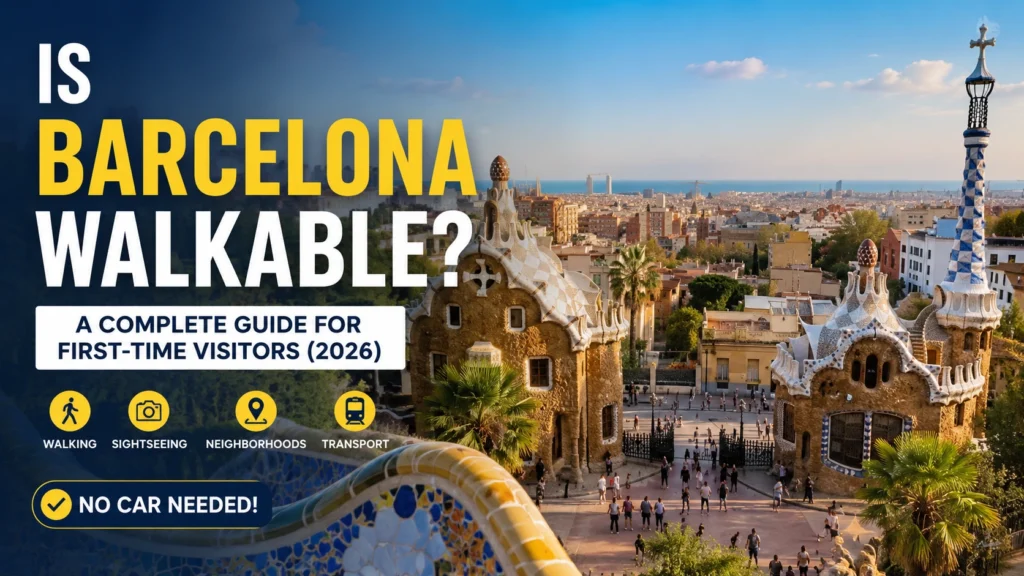
Quick Answer: Is Barcelona Walkable?
Yes.
Barcelona is extremely walkable and ranks among the easiest European cities to explore on foot.
Most major attractions are concentrated within central districts such as:
- Gothic Quarter
- El Born
- Eixample
- Barceloneta
- Gràcia
These neighborhoods are connected by wide sidewalks, pedestrian-friendly streets, public squares, and scenic walking routes.
For most visitors, the biggest challenge isn’t whether Barcelona is walkable—it’s deciding how much walking they’re willing to do because there is so much to see.
Barcelona Walkability Overview
| Category | Rating |
|---|---|
| Walkability | 9/10 |
| Tourist Accessibility | 9/10 |
| Public Transportation | 9/10 |
| Ease of Navigation | 8.5/10 |
| Need for a Car | 2/10 |
If you’re staying in the city center, you’ll likely spend more time walking than using transportation.
Why Barcelona Feels So Walkable
Barcelona wasn’t designed around cars.
Many of its most popular districts were built long before modern traffic became a concern. As a result, you’ll find countless pedestrian-friendly areas, lively plazas, and neighborhoods where walking feels natural.
Several factors contribute to Barcelona’s reputation as a walkable city:
Compact Tourist Areas
Unlike destinations where attractions are scattered across multiple districts, Barcelona’s highlights are relatively concentrated.
A single day of walking can easily include:
- Gothic Quarter
- La Rambla
- El Born
- Barceloneta
- Port Vell
without feeling rushed.
Wide Sidewalks
The Eixample district is famous for its spacious avenues and unusually wide sidewalks.
Walking here feels comfortable even during busy tourist seasons.
Beautiful Streets
Barcelona rewards pedestrians.
Instead of rushing from attraction to attraction, visitors constantly discover:
- Hidden squares
- Historic buildings
- Local cafés
- Street performers
- Small boutiques
Many of the city’s best experiences happen between landmarks rather than at the landmarks themselves.
Excellent Weather
Barcelona enjoys a Mediterranean climate that encourages outdoor exploration for most of the year.
Spring and autumn are particularly ideal for walking.
Can You Visit Barcelona Without a Car?
Absolutely.
In fact, most travelers should avoid renting one.
A car creates more problems than solutions inside the city.
Why You Don’t Need a Car
Barcelona offers:
- An extensive metro network
- Affordable buses
- Trams
- Airport transportation
- Walkable neighborhoods
Most visitors find that combining walking with occasional metro rides covers virtually all their needs.
Why Renting a Car Can Be a Mistake
Many first-time visitors assume a rental car will make sightseeing easier.
The reality is often the opposite.
Common issues include:
- Expensive parking
- Heavy traffic
- Limited parking spaces
- One-way streets
- Stressful driving conditions
For a typical city-break trip, a car rarely adds value.
Unless you’re planning day trips outside Barcelona, walking and public transportation are usually the smarter choice.
Best Walkable Neighborhoods in Barcelona
Not every neighborhood offers the same walking experience.
These are the areas where pedestrians thrive.
Gothic Quarter
The Gothic Quarter is the historic heart of Barcelona.
Walking through its maze-like streets feels like stepping back in time.
Highlights include:
- Barcelona Cathedral
- Plaça Reial
- Plaça Sant Jaume
- Medieval alleyways
Cars have limited access in many areas, making the neighborhood ideal for exploration on foot.
El Born
Many travelers consider El Born the perfect walking neighborhood.
It combines:
- Historic architecture
- Local restaurants
- Trendy cafés
- Cultural attractions
Walking from El Born to the Gothic Quarter takes only minutes.
Popular attractions include:
- Santa Maria del Mar
- Picasso Museum
- Ciutadella Park
Eixample
If the Gothic Quarter represents old Barcelona, Eixample represents modern Barcelona.
Its organized grid layout makes navigation incredibly easy.
Key attractions include:
- Sagrada Familia
- Casa Batlló
- Casa Milà
- Passeig de Gràcia
For first-time visitors, Eixample is arguably the easiest neighborhood to navigate.
Barceloneta
Barceloneta offers a completely different walking experience.
Instead of historic streets, you’ll enjoy:
- Beach promenades
- Coastal views
- Seafood restaurants
- Outdoor cafés
A sunset walk along Barceloneta Beach is one of the most enjoyable experiences in the city.
Gràcia
Gràcia feels more local and less touristy.
Its relaxed atmosphere, small plazas, and independent shops make it ideal for travelers who enjoy wandering without a strict itinerary.
Many visitors end up spending longer here than originally planned.
Walking Distance Between Major Attractions
One reason Barcelona feels so manageable is the short distance between attractions.
| Route | Approximate Walking Time |
|---|---|
| Gothic Quarter → La Rambla | 5 minutes |
| Gothic Quarter → El Born | 10 minutes |
| El Born → Barceloneta | 20 minutes |
| Casa Batlló → Casa Milà | 8 minutes |
| Passeig de Gràcia → Plaça Catalunya | 15 minutes |
| Barceloneta → Port Vell | 15 minutes |
| Sagrada Familia → Passeig de Gràcia | 25 minutes |
For many travelers, these distances make walking faster than waiting for transportation.
A Typical Day Exploring Barcelona on Foot
To understand Barcelona’s walkability, imagine a typical sightseeing day.
You start in the Gothic Quarter with breakfast.
From there, you walk to:
- La Rambla
- Boqueria Market
- Plaça Reial
Then continue toward El Born.
After lunch, you visit Ciutadella Park before heading to Barceloneta Beach for the afternoon.
Finally, you enjoy dinner near Port Vell and walk back toward your hotel.
Throughout the day, you’ve visited several of Barcelona’s most famous areas without needing a car and with minimal use of public transportation.
This is exactly how many visitors experience the city.
When Public Transportation Is Still Useful
Even highly walkable cities have limits.
Barcelona is no exception.
There are situations where using public transportation saves significant time and energy.
Park Güell
Although technically walkable, the uphill journey can be tiring, especially during summer.
Many visitors prefer taking the metro and walking the final stretch.
Tibidabo
Located on a mountain overlooking the city, Tibidabo is best reached using public transportation.
Camp Nou
Depending on your hotel location, taking the metro may be more practical than walking.
Barcelona Airport
The airport is outside the city center and requires transportation.
Most travelers use:
- Aerobús
- Metro
- Taxi
- Airport transfer
The good news is that these destinations represent exceptions rather than the norm.
Where Should You Stay If You Want to Walk Everywhere?
Choosing the right neighborhood can dramatically reduce the amount of transportation you’ll need during your trip.
If your goal is to explore Barcelona primarily on foot, location matters.
Best Overall: Gothic Quarter
The Gothic Quarter places you in the center of the action.
You’ll be within walking distance of:
- La Rambla
- El Born
- Barcelona Cathedral
- Port Vell
- Plaça Catalunya
This area is ideal for first-time visitors who want to maximize sightseeing time.
Best for Architecture Lovers: Eixample
Eixample offers easy access to many of Barcelona’s architectural masterpieces.
You’ll be close to:
- Casa Batlló
- Casa Milà
- Passeig de Gràcia
- Sagrada Familia
The wide streets and organized layout make walking particularly enjoyable.
Best for Atmosphere: El Born
El Born combines history, culture, food, and nightlife.
Many visitors consider it the perfect balance between convenience and local charm.
Best for Beach Access: Barceloneta
If beach walks are a priority, Barceloneta is difficult to beat.
The neighborhood offers direct access to the Mediterranean coastline while remaining connected to the historic center.
Read also our full guide : Best Area to Stay in Barcelona
Common Walking Mistakes First-Time Visitors Make
Barcelona is walkable, but many travelers make mistakes that turn an enjoyable experience into a tiring one.
Trying to Walk Absolutely Everywhere
The city is walkable, but not every destination should be reached on foot.
Walking to places like Tibidabo or making multiple uphill journeys in the same day can be exhausting.
Smart travelers combine walking with occasional metro rides.
Wearing the Wrong Shoes
Many visitors underestimate how much walking they’ll do.
A typical sightseeing day often exceeds:
- 15,000 steps
- 20,000 steps
- Sometimes 25,000+ steps
Comfortable walking shoes are essential.
Ignoring the Heat
Summer temperatures can make long afternoon walks uncomfortable.
During July and August, it’s often better to explore early in the morning and later in the evening.
Carrying Too Much
Heavy backpacks quickly become annoying during long walking days.
Pack light and carry only what you need.
Walking vs Using the Metro
Many travelers wonder whether they should walk or use Barcelona’s metro system.
The answer depends on distance.
Walk When:
- Attractions are less than 20 minutes apart
- Exploring historic neighborhoods
- Visiting Gothic Quarter
- Exploring El Born
- Walking along Barceloneta Beach
Use the Metro When:
- Traveling across the city
- Visiting Park Güell
- Going to Camp Nou
- Traveling during extreme summer heat
- Saving time on longer journeys
The best strategy is usually a combination of both.
Is Barcelona Better Explored on Foot?
In many ways, yes.
Walking allows you to experience parts of Barcelona that transportation simply skips.
You’ll notice:
- Hidden courtyards
- Small bakeries
- Local cafés
- Street art
- Historic architecture
- Neighborhood life
Many of the city’s most memorable moments happen between major attractions rather than at them.
Visitors who rush from attraction to attraction often miss the atmosphere that makes Barcelona special.
Suggested 3-Day Walking Experience
Day 1: Historic Barcelona
Focus on:
- Gothic Quarter
- Barcelona Cathedral
- La Rambla
- Plaça Reial
- Boqueria Market
Walking Level: Easy
Day 2: Modernist Barcelona
Explore:
- Passeig de Gràcia
- Casa Batlló
- Casa Milà
- Sagrada Familia
Walking Level: Moderate
Day 3: Waterfront and Local Neighborhoods
Discover:
- El Born
- Ciutadella Park
- Barceloneta
- Port Vell
Walking Level: Easy to Moderate
This approach allows visitors to experience the city’s highlights without feeling rushed.
Read our full guide : 3 Days in Barcelona Itinerary
Is Barcelona Safe for Walking at Night?
Generally, yes.
Barcelona remains lively well into the evening, especially in central neighborhoods.
Areas commonly considered safe for evening walks include:
- Eixample
- El Born
- Gothic Quarter
- Passeig de Gràcia
- Barceloneta
However, travelers should remain aware of pickpocketing, particularly in crowded tourist zones.
Basic precautions include:
- Keeping valuables secure
- Avoiding displaying expensive items unnecessarily
- Staying alert in crowded locations
Most visitors experience no issues during their stay.
Barcelona Walkability Pros and Cons
| Pros | Cons |
|---|---|
| Compact city center | Some attractions are far apart |
| Beautiful walking routes | Summer heat can be intense |
| Wide sidewalks | Certain hills require effort |
| Excellent pedestrian infrastructure | Crowded tourist areas |
| No need for a car | Long walking days can be tiring |
| Easy navigation | Airport requires transportation |
For most travelers, the advantages far outweigh the disadvantages.
Final Verdict: Is Barcelona Walkable?
Yes—Barcelona is one of the most walkable cities in Europe.
Most visitors can comfortably explore the city’s most famous attractions, historic districts, beaches, shopping streets, and cultural landmarks without renting a car.
The combination of compact neighborhoods, pedestrian-friendly streets, excellent public transportation, and beautiful architecture makes Barcelona ideal for travelers who enjoy exploring on foot.
If you’re staying in a central neighborhood such as the Gothic Quarter, El Born, or Eixample, you’ll likely spend most of your trip walking between attractions while only occasionally using the metro.
For first-time visitors, that’s one of Barcelona’s biggest advantages.
Instead of spending your vacation navigating traffic or searching for parking, you can focus on experiencing the city itself.
Frequently Asked Questions
Is Barcelona a walkable city?
Yes. Barcelona is widely considered one of the most walkable cities in Europe thanks to its compact layout, pedestrian-friendly neighborhoods, and excellent infrastructure.
Can you explore Barcelona without a car?
Absolutely. Most visitors do not need a car. Walking combined with occasional metro rides is usually sufficient.
Is the Gothic Quarter walkable?
Yes. The Gothic Quarter is one of the most pedestrian-friendly areas in Barcelona and is best explored on foot.
How many days do you need in Barcelona?
Three days is enough to see many of Barcelona’s main attractions, although longer stays allow for a more relaxed experience.
Is Barcelona safe for walking?
Generally, yes. Visitors should simply remain aware of pickpocketing in crowded tourist areas.
What is the most walkable neighborhood in Barcelona?
The Gothic Quarter, El Born, and Eixample are often considered the most walkable neighborhoods for visitors.
Read Also
Before You Go
Before booking your trip, compare flight prices early and secure accommodation in a central neighborhood. Staying within walking distance of Barcelona’s main attractions can save both time and money while making your trip significantly more enjoyable.